AstroNav | Flight 3
The archived work-in-progress plan for AstroNav Flight 3, including telemetry, apogee detection and launch-platform changes.
Archived update: I wrote this plan in August 2025 and expected the launch around August or September. The legacy page never recorded the final result, so this article remains a snapshot of the plan—not a claim that every goal was completed.
Goals
For Flight 3, I wanted to confirm that AstroNav behaved as intended through an entire flight. The checklist was:
- Keep the link between the flight controller and base station stable.
- Fire the parachute backup charge when apogee is detected.
- Save data to flash quickly and consistently.
- Send live telemetry without interrupting flight-state logic.
- Detect states such as take-off, apogee and landing.
Test the cheaper hardware first
My plan was to begin with a smaller rocket containing less expensive hardware. That flight would test the basic functions—especially the backup charge—before I risked the larger vehicle and its more fragile electronics.
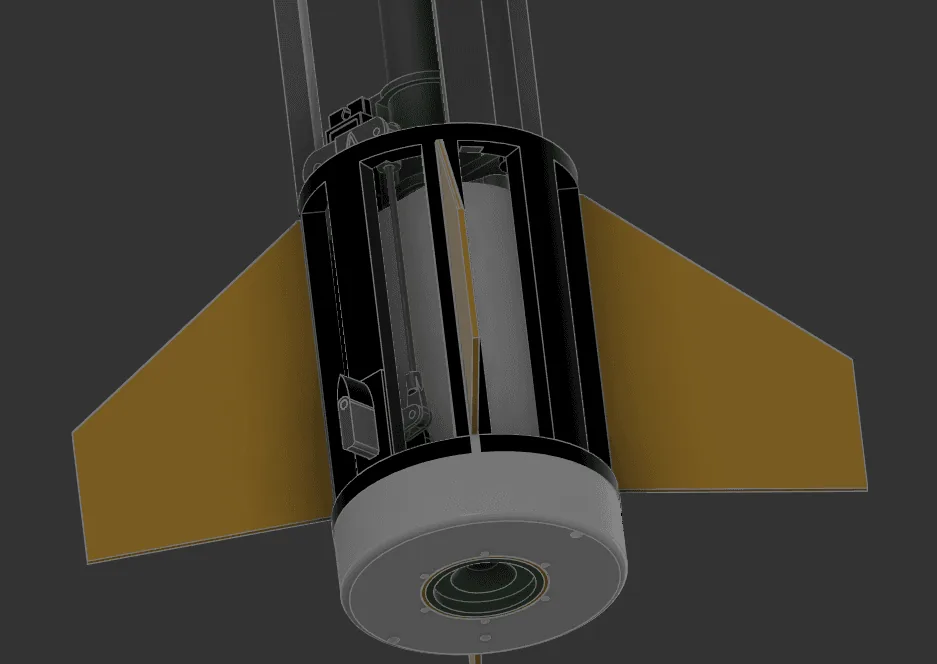
The larger rocket included a DJI O4 air unit and an orientation-control mechanism. Those parts made a staged test approach especially important.
Launch-platform changes
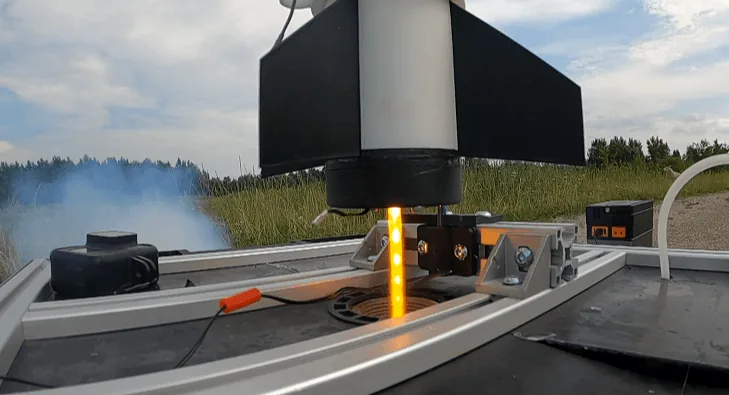
I also rebuilt the launch guidance. The earlier clamp system created too much friction when the rocket left the platform. I replaced it with an aluminium profile and guides mounted to the rocket, aiming for a much smoother departure from the rail. I repaired parts of the platform and added more status LEDs at the same time.